What Exactly Is a Metric?
Nandan Jadhav
Outside the IT world, the word metric has a completely different meaning. It generally refers to the metric system, a standard way of measuring things using metres, grams, litres, and so on.
In Information Technology, however, a metric is something entirely different. It is a numerical measurement used to understand the health, performance, or behaviour of an application, server, database, network device, or cloud service.
Over the years, I’ve worked with engineers from different technology backgrounds, and one thing I’ve noticed is that there is often confusion around what a metric actually is. Some people think a metric is an alert, others believe it’s something that appears on a dashboard, while some confuse it with logs or traces.
Although these concepts are related, they are not the same.
Before we dive deeper, let’s look at what a metric actually looks like.
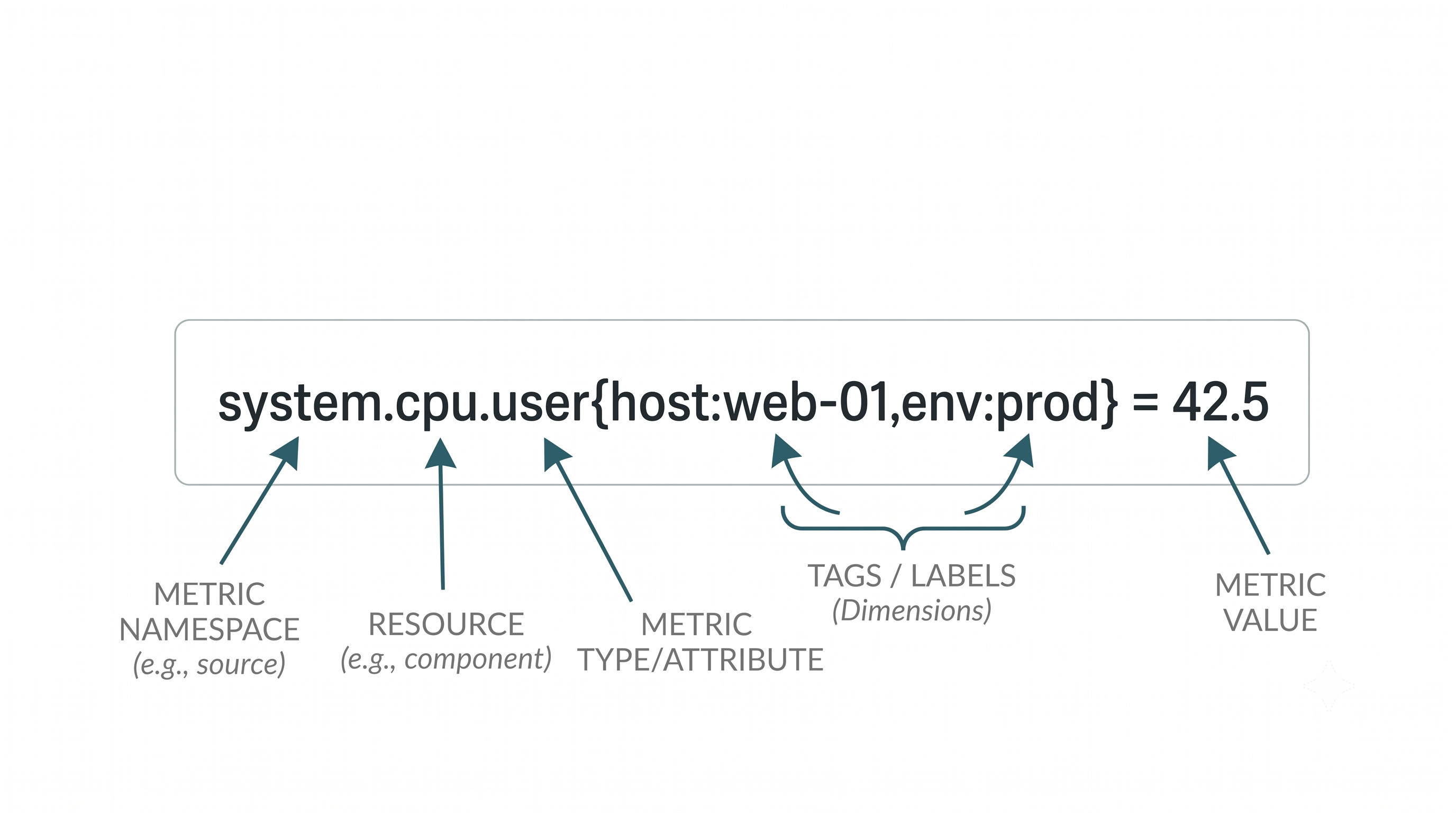
Figure 1: Components of a monitoring metric.
The example above represents a typical monitoring metric similar to those collected by monitoring platforms such as Prometheus, Datadog, and many other observability tools.
Let’s break it down:
- Metric Namespace: Identifies the overall system or service the metric belongs to.
- Resource: Indicates the component being monitored, such as CPU, memory, or disk.
- Metric Type / Attribute: Specifies what aspect of the resource is being measured.
- Tags / Labels (Dimensions): Provide additional context such as the host, environment, region, or application. These make it possible to filter and group metrics.
- Metric Value: The actual numerical measurement captured at a specific point in time.
Metrics can be found almost everywhere in modern IT environments. Cloud platforms such as AWS, Microsoft Azure, and Google Cloud provide a wide range of built in metrics for their services. Similarly, monitoring agents installed on servers or applications continuously collect metrics that help engineers understand how systems are performing.
For example, a server may report measurements such as:
- CPU utilisation: 42%
- Memory usage: 6.3 GB
- Disk space used: 78%
- Network traffic: 125 MB/s
Each of these is a metric because it represents a numerical measurement taken at a specific point in time.
What makes metrics so powerful is that they are collected continuously. Looking at a single CPU utilisation value of 42% doesn’t tell us very much. However, collecting that same measurement every minute, hour after hour, allows us to identify patterns and answer important questions, such as:
- Is CPU usage gradually increasing over time?
- Does utilisation spike during business hours?
- Was there an unusual increase just before an application outage?
- Do we need to scale the application before users start experiencing performance issues?
This is why monitoring platforms store metrics as time series data rather than simply displaying the latest value.
One of the biggest misconceptions in observability is that everything is a metric.
It isn’t.
An alert is not a metric.
A dashboard is not a metric.
A log is not a metric.
A trace is not a metric.
A metric is simply a numerical measurement collected over time. Everything else, including dashboards, alerts, SLOs, reports, and visualisations, is built using these measurements.
Understanding this distinction is one of the first steps towards building effective monitoring and observability practices. Once you understand what a metric really is, concepts such as gauges, counters, histograms, percentiles, and cardinality become much easier to understand.
Key Takeaways
- A metric is a numerical measurement collected over time.
- Metrics are stored as time series data, allowing engineers to identify trends and patterns.
- A single metric value provides limited information. The real value comes from collecting measurements continuously over time.
- Alerts, dashboards, logs, and traces are not metrics. They are built using or around metrics.
- Tags and labels add context, making it possible to filter, group, and analyse metrics across different systems and environments.
- Understanding metrics is the foundation of effective monitoring and observability.